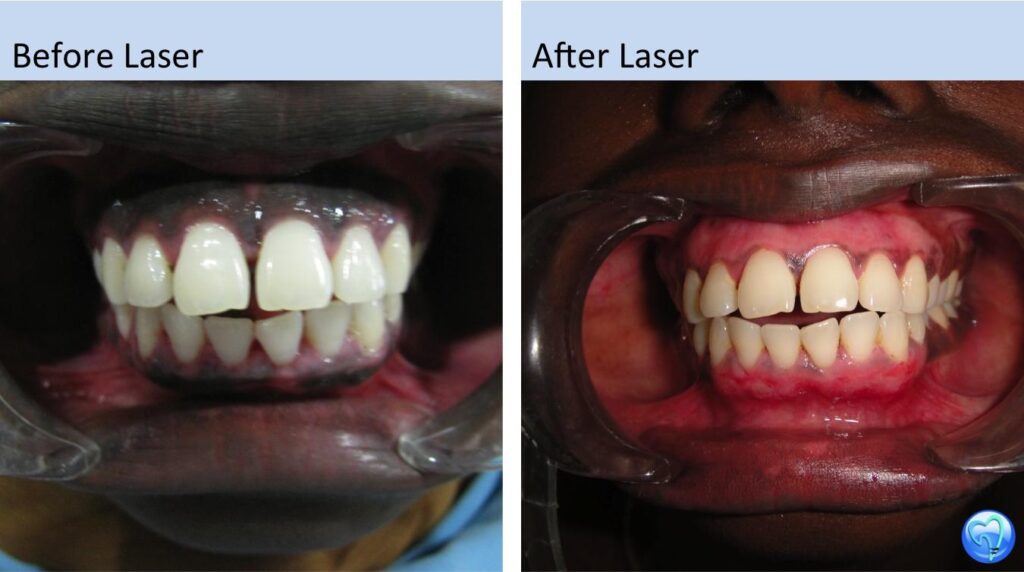
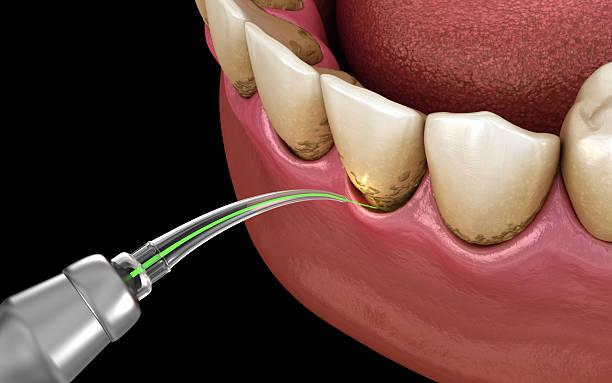
Laser gum treatment is a modern dental procedure that uses a special laser light to treat gum disease, infected gums, bleeding gums, and damaged gum tissue without traditional cutting surgery.
During the treatment, the dentist uses a laser to:
Remove infected gum tissue
Kill harmful bacteria in the gums
Reduce bleeding and swelling
Clean deep gum pockets around teeth
Help gums heal faster
It is often used for patients with gum disease (periodontal disease), bleeding gums, gum infections, or gum reshaping.
Benefits of Laser Gum Treatment
Less pain
Minimal bleeding
No stitches in many cases
Faster healing
More comfortable than traditional gum surgery
Conclusion: Laser gum treatment is a safe, advanced, and less painful method to improve gum health and protect teeth from serious gum problems.
Why Choose Laser Gum Treatment?
Less Pain: Laser treatment is usually less painful than traditional gum surgery.
No Cutting or Stitches: In many cases, there is no need for blades or stitches.
Less Bleeding: The laser helps stop bleeding during treatment.
Faster Healing: Gums heal quicker compared to normal surgery.
Less Swelling: Patients usually experience less swelling and discomfort.
Protects Healthy Tissue: More precise treatment with less damage to healthy gums.
Better for Gum Disease: Effective for treating bleeding gums and periodontal problems.
Quick Procedure: Treatment time is often shorter.
Comfortable Recovery: Patients can return to normal activities faster.
In simple words: Laser gum treatment is a modern, safe, and comfortable option for treating gum disease, bleeding gums, and infected gums with better comfort and quicker recovery.
When Is a Laser Gum Treatment Needed?
Laser gum treatment is recommended when a person has gum problems or gum disease that need advanced treatment. It may be needed in the following situations:
Bleeding Gums: When gums bleed while brushing or eating.
Gum Disease (Periodontitis): For moderate to severe gum infection.
Swollen or Red Gums: When gums are inflamed or painful.
Deep Gum Pockets: When bacteria build up around teeth and gums.
Gum Infection: To remove infected tissue and bacteria.
Loose Teeth Due to Gum Disease: To help protect gum and bone health.
Gum Recession Treatment: For damaged or receding gums.
Gummy Smile Correction: To reshape excess gum tissue.
Bad Breath from Gum Infection: When gum bacteria cause long-term bad breath.
When Traditional Surgery Is Not Preferred: For patients wanting less pain, less bleeding, and faster recovery.
Laser gum treatment is usually suggested after a dental check-up when the dentist finds serious gum issues that cleaning alone cannot fix.
Laser Gum Treatment Process – Step by Step
Dental Check-Up & Gum Examination: The dentist checks your gums, bleeding, infection, and gum pocket depth.
Digital X-Ray / Scanning: X-rays may be taken to check bone loss and gum condition.
Diagnosis & Treatment Planning: The dentist decides if laser gum treatment is suitable for your gum problem.
Local Anesthesia (If needed): The treatment area is numbed to make the procedure comfortable.
Laser Cleaning of Infected Gums: The laser removes infected tissue and harmful bacteria from the gums.
Deep Gum Pocket Cleaning: Plaque and tartar are cleaned from deep areas around the teeth roots.
Laser Disinfection: The laser helps disinfect the area and reduce bacteria.
Gum Tissue Healing Process: Healthy gum tissue starts reattaching around the teeth.
Post-Treatment Instructions: The dentist gives advice about food, brushing, and medicines for recovery.
Follow-Up Check-Up: A review visit is done to monitor healing and gum improvement.
Result: Laser gum treatment helps reduce infection, bleeding, swelling, and improves overall gum health with less pain and faster recovery.
After Laser Gum Treatment – Precautions
Avoid Hard Foods: Do not eat hard, spicy, or crunchy foods for a few days. Prefer soft foods.
Do Not Smoke or Drink Alcohol: Avoid smoking and alcohol as they slow healing.
Brush Gently: Use a soft toothbrush and clean gently around treated gums.
Avoid Hot Foods & Drinks: Eat lukewarm or cool food for 24–48 hours.
Take Medicines on Time: Use prescribed medicines or mouthwash as advised by the dentist.
Do Not Touch the Treated Area: Avoid poking or pressing the gums with fingers or tongue.
Maintain Oral Hygiene: Keep your mouth clean to avoid infection.
Avoid Heavy Exercise for 1–2 Days: Rest helps faster healing.
Rinse Carefully: Use salt water or prescribed mouthwash gently if advised.
Attend Follow-Up Visit: Visit the dentist for check-up and proper healing review.
Important Tips
Mild discomfort or slight swelling is normal for a short time.
Drink plenty of water.
Avoid tobacco and very hot foods.
Emergency: If there is heavy bleeding, severe pain, or unusual swelling, contact your dentist immediately.